
Last updated: April 2026
Shark diving with the Thresher Sharks of Malapascua
Malapascua is the only place in the world where you can dive with the magnificent thresher sharks every day, so come and see these amazing creatures in action! You are very lucky – there has never been a better time to come for thresher sharks! We have had incredible thresher shark dives since 2022, when the sharks moved from Monad Shoal to Kimud Shoal. Now they are seen shallower, later in the morning and much closer in general – which means far better sightings and fantastic photo ops. We are also getting regular tiger shark sightings at Monad Shoal, as well as other large sharks and rays. We are so sure you will see thresher sharks that we offer a unique “Thresher Shark Guarantee”: if you do not see thresher sharks on one double-dive Kimud trip, we will offer you a third dive for free. Kimud Shoal is about an hour away and always a 2 or 3-dive trip. Due to its unique nature and given we don’t want anyone to miss them, we now have a second guarantee, our “Kimud Dive Guarantee.” For anyone who has only one night on the island, at no extra charge, we guarantee we will go to Kimud (weather dependent). So, with TSD, you can be sure we won’t cancel the dive, even if it’s only you. T&C apply, find out more.
About Thresher Sharks
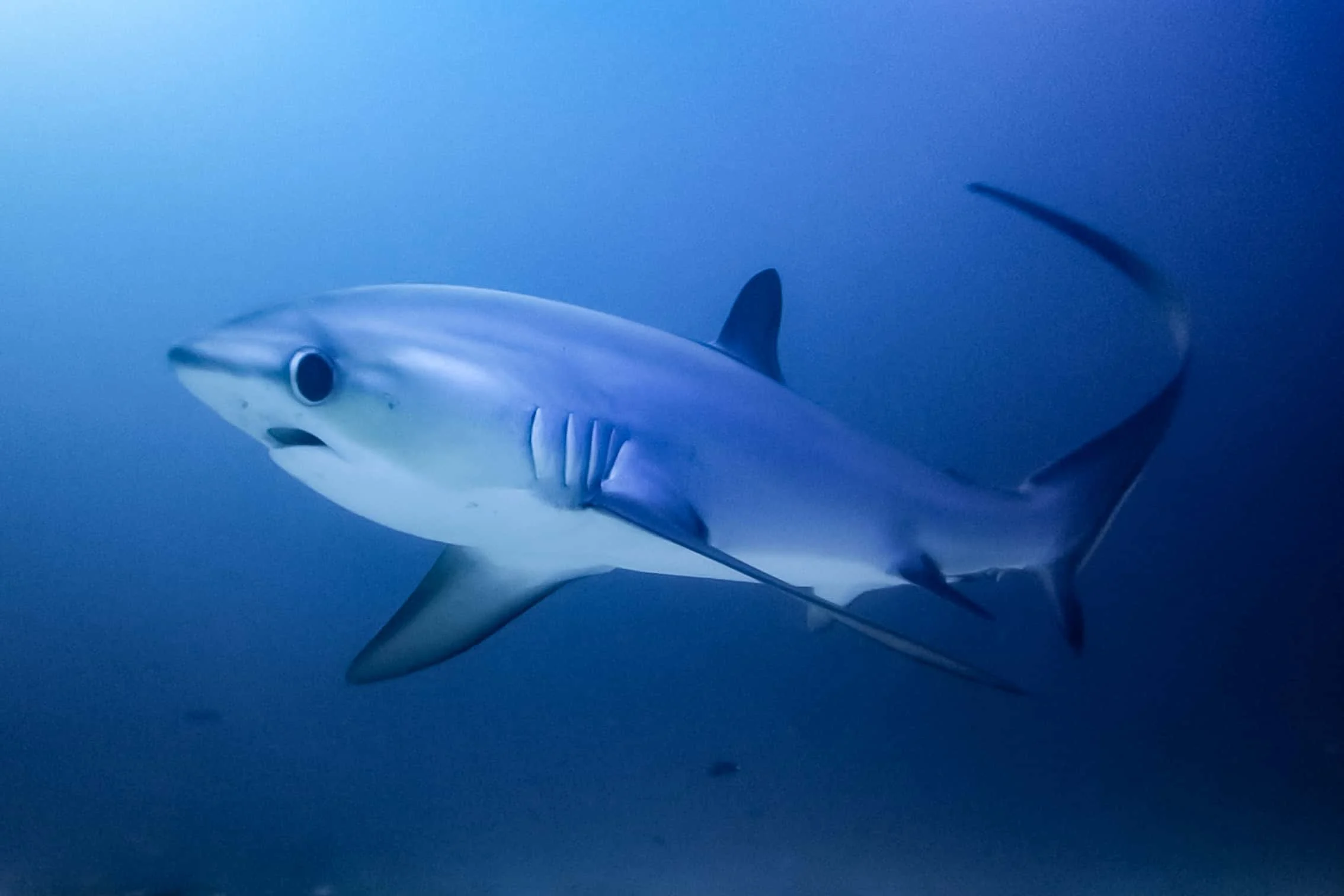
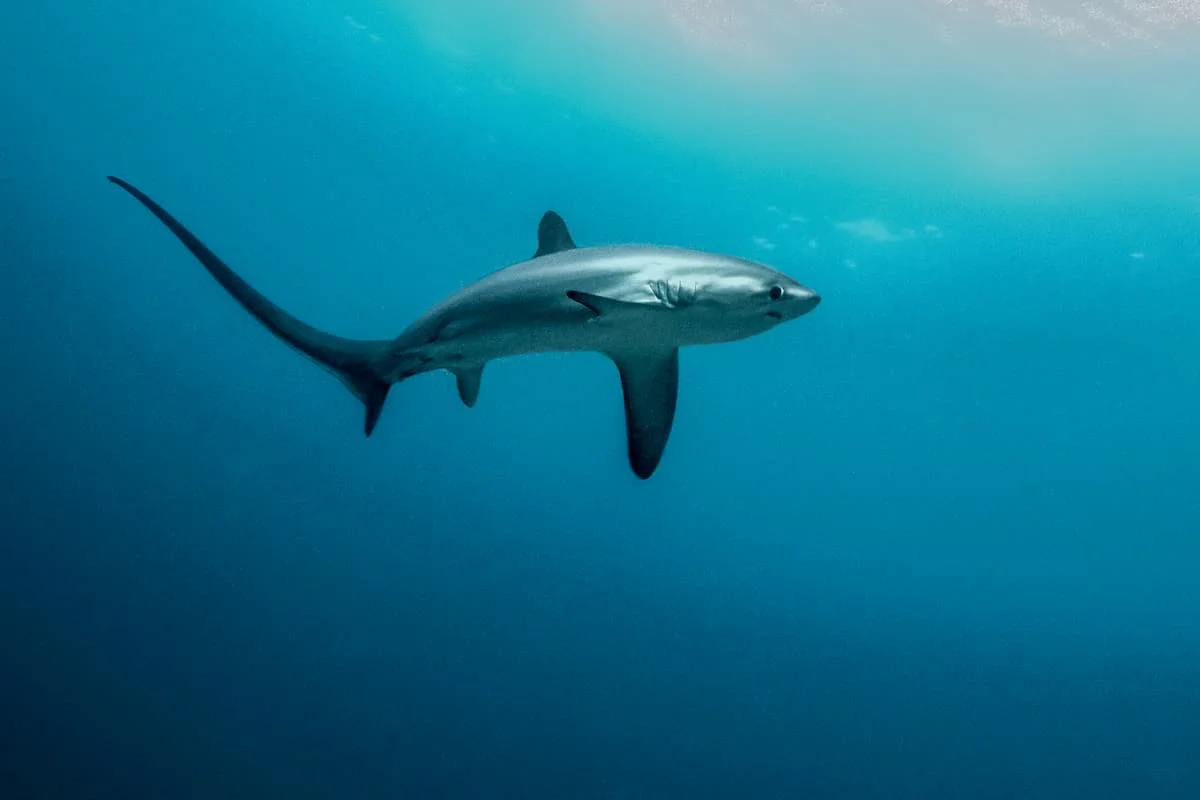
The thresher shark, or Alopias pelagicus is a type of mackerel shark or Lamniformes. In German it is known as Der Gemeine Fuchshai, or fox shark. The threshers grow up to a length of about 4 meters, about half of which is the huge scythe-like tail for which it is named. Thresher sharks normally live in deep water and are nocturnal (night creatures), so are not often seen by divers. Although they can be seen occasionally in other locations, we know of nowhere else they can be seen so regularly. They have very small, sharp teeth and very big eyes to see in the dark. They eat squid and schooling fish such as herring and mackerel and they use their tails to “corral” the fish into denser schools. The tail may also be used to stun the fish. They will sometimes “breach” and can jump completely out of the water. Sadly, like most other shark species, the number of thresher sharks in the world is declining due to overfishing for their fins and meat. Monad Shoal and Kimud Shoal have been made marine parks to help protect these creatures. Learn everything you ever needed to know about thresher sharks here.
Kimud Shoal
Kimud Shoal is a sunken island at 12m. Thresher sharks live in deeper parts, but in the early morning, before it gets too light, they come up to the Shoal, attracted by its cleaning stations.
What time do we dive?
We have found that the best time to dive with the sharks is anywhere between sunrise and 12pm, and a very early start is no longer required.
Why are they here?
The thresher sharks live and hunt in deep water for most of the day, but in the early morning, before it gets too light, they come up to the Shoal, attracted by its cleaning stations. Here they have a symbiotic (mutually beneficial) relationship with the small fish called cleaning wrasse which eat dead skin and bacteria from the shark’s body, its gills, and even inside its mouth. Because the cleaning benefits these huge animals, the sharks would never think of eating the wrasse as an early morning snack. The cleaning stations are like a car wash for fish.
Diving with Thresher Sharks on Malapascua
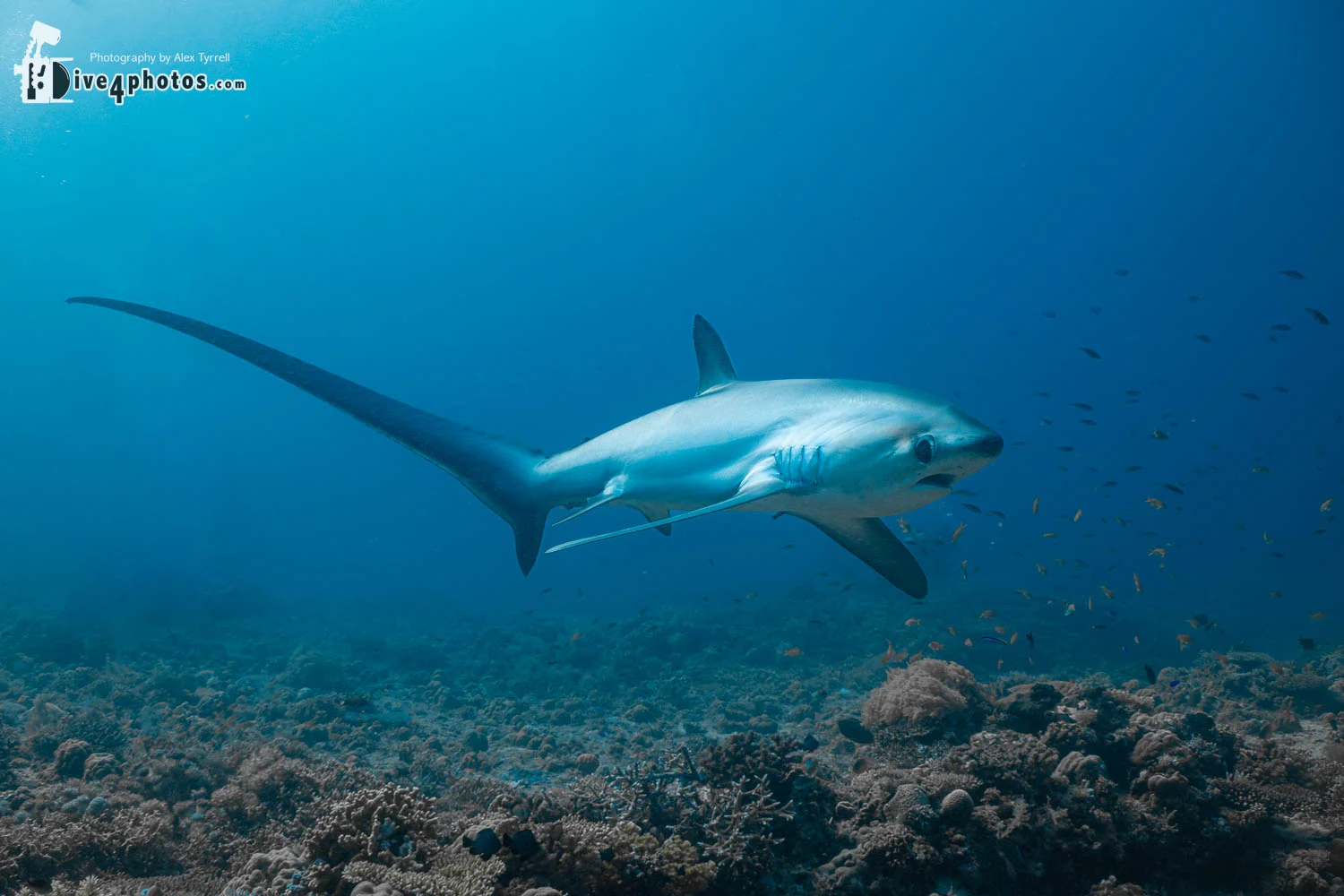
The sharks are not dangerous to humans and will swim over the side of the shoal if startled. Threshers like to circle, sometimes in twos and threes, so if we see a shark as it is swimming away, it is likely the shark(s) will soon come back into view. On our dives, we move slowly, and if we see a shark, we stop and wait. If we stay still and make no sudden movements, sometimes the sharks can come so close you could almost touch them. We never swim after the sharks or use camera strobes as this will scare them away. Kimud Shoal is an advanced dive site, so if you are Open Water certified, you will be required to go with an instructor. Depending on your previous experience, you may be required to do a checkout dive. You can read more information on our direct bookings website. Please note: camera strobes and flashes are not allowed.
Best Time to Dive with Thresher Sharks
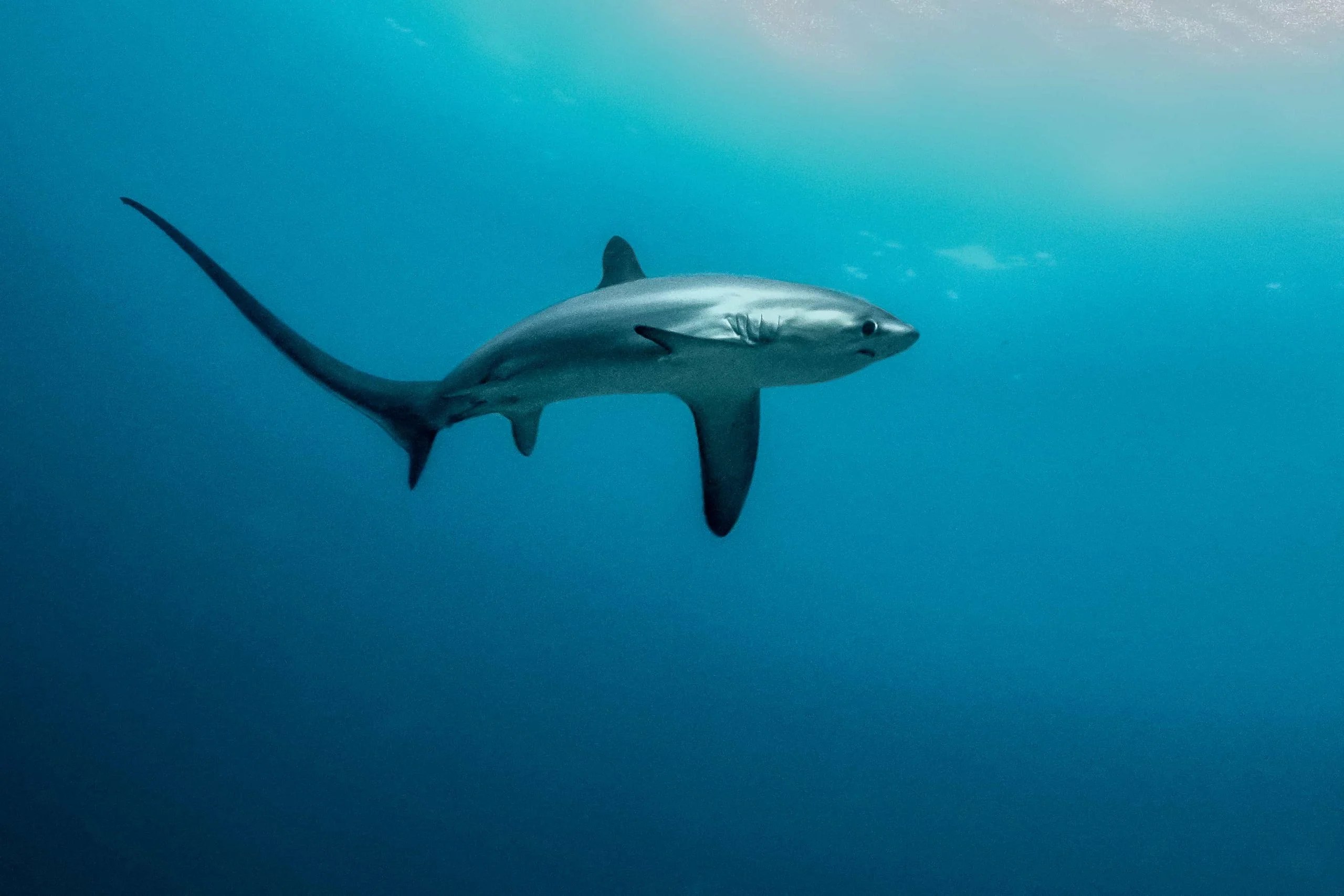
The Thresher Shark Divers team has tried to find the best time to dive with thresher sharks by extensive trial and error and a lot of experimentation. Our divemasters and instructors collect daily information on shark sightings and we record these details. We have found that the best time to dive with the sharks is anywhere between sunrise and midday. During this time period you have a good chance of seeing maybe 10 or more sharks. To minimize diver impact on the site and to maximize every diver’s chance of seeing a shark, the Dive Shop Association of Malapascua, spearheaded by TSD, decided on a protocol for diving with the sharks that will be followed by everyone. When this was implemented, sightings increased dramatically. If any of our customers wish to go at a later time this can also be arranged.
PADI Thresher Shark Diver Specialty
Want to know more? Take the PADI Thresher Shark Diver Specialty Course! TSD offers a unique Thresher Shark Diver Specialty course sanctioned by PADI. You will learn a lot about thresher sharks and about sharks in general, and the Kimud Shoal dive will never be the same again!
What else can you see on the shark dive?
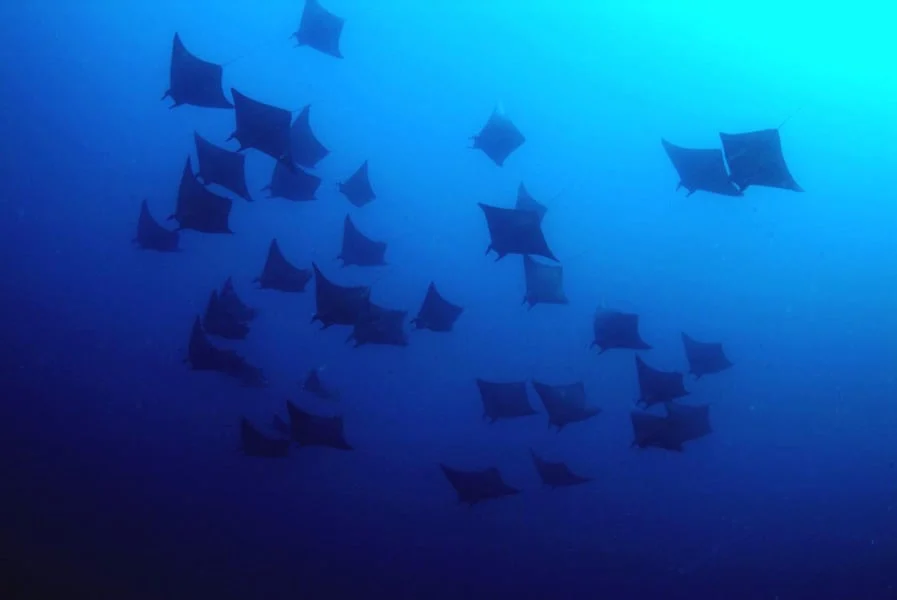
Sharks are not the only ones to benefit from the cleaning stations. The wrasse also attract other pelagics. Large rays are often seen. Schools of devil rays have been more prolific this year than ever before. Other species of shark can be seen such as grey reef sharks and whitetip sharks. Hammerheads are very occasional visitors. The shoal is home to a huge diversity of species: it is a great dive by itself – batfish, flutemouths, barracuda, tuna, mantis shrimp, pipefish, scorpionfish, free-swimming lionfish, moorish idols, schooling bannerfish, unicornfish, squid, octopus and various moray eels. You will often see these fish being cleaned as well and because they stay so still and are so preoccupied it is a great chance to observe them up close.